Get the top HN stories in your inbox every day.
v1ne
HWR_14
> I don't know what this study is trying to show.
That hospitals should clean their employee's uniforms to prevent the spread of antibacteria resistant strains in a hospital setting, in the UK and elsewhere.
rmah
Hospitals in the US already use specialized washing machines that use much higher heat levels under OSHA and FDA guidelines. There are also special procedures for what gets washed with what and when.
poly2it
This is new to me. I've never heard about healthcare employees bearing this responsibility anywhere within the EU. Who does this study cater to?
akshayshah
In the US, it’s typical for hospitals to provide and launder scrubs used in sterile environments (especially surgical scrubs). However, scrubs are worn in many non-sterile environments too - and it’s often the employee’s responsibility to launder those scrubs. Sometimes, it’s also the employee’s responsibility to purchase non-sterile scrubs.
IMO, this isn’t as crazy as it may sound. It’s reasonable to expect healthcare workers to be professionally dressed (so no gym shorts and tee shirts). It’s also reasonable to want their clothing to be as washable as possible (no neckties, no infrequently-washed blazers or sweaters, fabrics made for harsher detergents and hotter wash water, etc.). Scrubs fit the bill and they’re an improvement over the business casual attire that preceded them.
So why not make everyone use hospital-owned, hospital-laundered scrubs? Because employees don’t like them. Hospital scrubs are usually baggy, scratchy, inconsistently sized, and just plain ugly. I’m a man, but the fit problems seemed especially bad for women. For many people, it’s not pleasant to spend every work day uncomfortable, dissatisfied with their appearance, and with their pants about to fall off.
The methods in the article aren’t super convincing, though the conclusion (wash everyone’s scrubs in a commercial facility) has some intrinsic appeal. Accelerating the rate at which hospital bacteria acquire resistance to detergents is certainly bad - it’s already quite hard to adequately clean healthcare facilities.
HWR_14
As the second half of my post says, healthcare workers in the UK (and elsewhere). To quote the study's second sentence: " In the UK, domestic laundering machines (DLMs) are commonly used to clean healthcare worker uniforms, raising concerns about their effectiveness in microbial decontamination and role in AMR development"
vintermann
I thought they did that everywhere.
DebtDeflation
>your clothes would not last that long
Washing on cold or warm, gentle cycle, and then either tumble drying on low or hang drying will greatly extend the life of your clothes. Washing on hot with a more vigorous cycle and then drying on hot not only risks shrinkage in the short term but will cause your clothes to wear out and fall apart much faster.
ajuc
In Europe most people don't use cloth dryiers. You just hang the clothes on lines (usually on your balcony or in your bathroom if you live in a flat, or in your backyard if you live in a detached home). Clothes are dry the next day anyway, what's the rush?
I wonder if the UV from sun vs the longer time to dry results in less bacteria overall.
HideousKojima
> In Europe most people don't use cloth dryiers. You just hang the clothes on lines (usually on your balcony or in your bathroom if you live in a flat, or in your backyard if you live in a detached home). Clothes are dry the next day anyway, what's the rush?
Lived in the Czech Republic for two years and got to experience this. The result: my underwear felt like sandpaper compared to when I dried it with an actual dryer.
dreamcompiler
Solar UV helps a little, but UVC (180-280 nm) is necessary to thoroughly kill many bacteria and viruses (including COVID) and UVC doesn't reach the Earth because the atmosphere absorbs it.
HPsquared
I'd expect a longer time spent "damp" probably increases bacterial growth.
balfirevic
> In Europe most people don't use cloth dryers
As a European, to the extent that this is true, it's only because they don't know what they're missing.
DebtDeflation
This is how it was in the US too growing up in the 1970s and 1980s, everyone had a clothes line in their yard. But by the late 1980s it seemed everyone started getting clothes dryers.
Tagbert
I live in the US and during warm weather hang my laundry outside on a clothesline to dry. I live in a suburb and so have a backyard for this. Living in an apartment would make this unfeasible. The area I live in has quite a lot of cool or rainy days so that does limit it to about 1/3 of the year.
energy123
Hang drying increases household dust. Clothes dryers' mechanical motion is great at removing lint from clothes as an unintended consequence.
eptcyka
Wait what? Who in the EU has the time to hang clothes out? That is like a 15x time difference between a dryer and hanging clothes out on a line.
JumpCrisscross
> don't get how the authors arrive at their hypothesis
They didn't. The “health care workers who wash their uniforms at home" did.
avereveard
Why would Healthcare worker do laundry at home with potentially contaminated uniform?
Probably that is the thing to address first.
ukuina
> Well, it's a bold hypothesis that a household washing machine should sterilise clothes.
That's on the manufacturers for adding "sanitize" cycles: https://cdn.avbportal.com/magento-media/GrandBlog/mhw8630hc%...
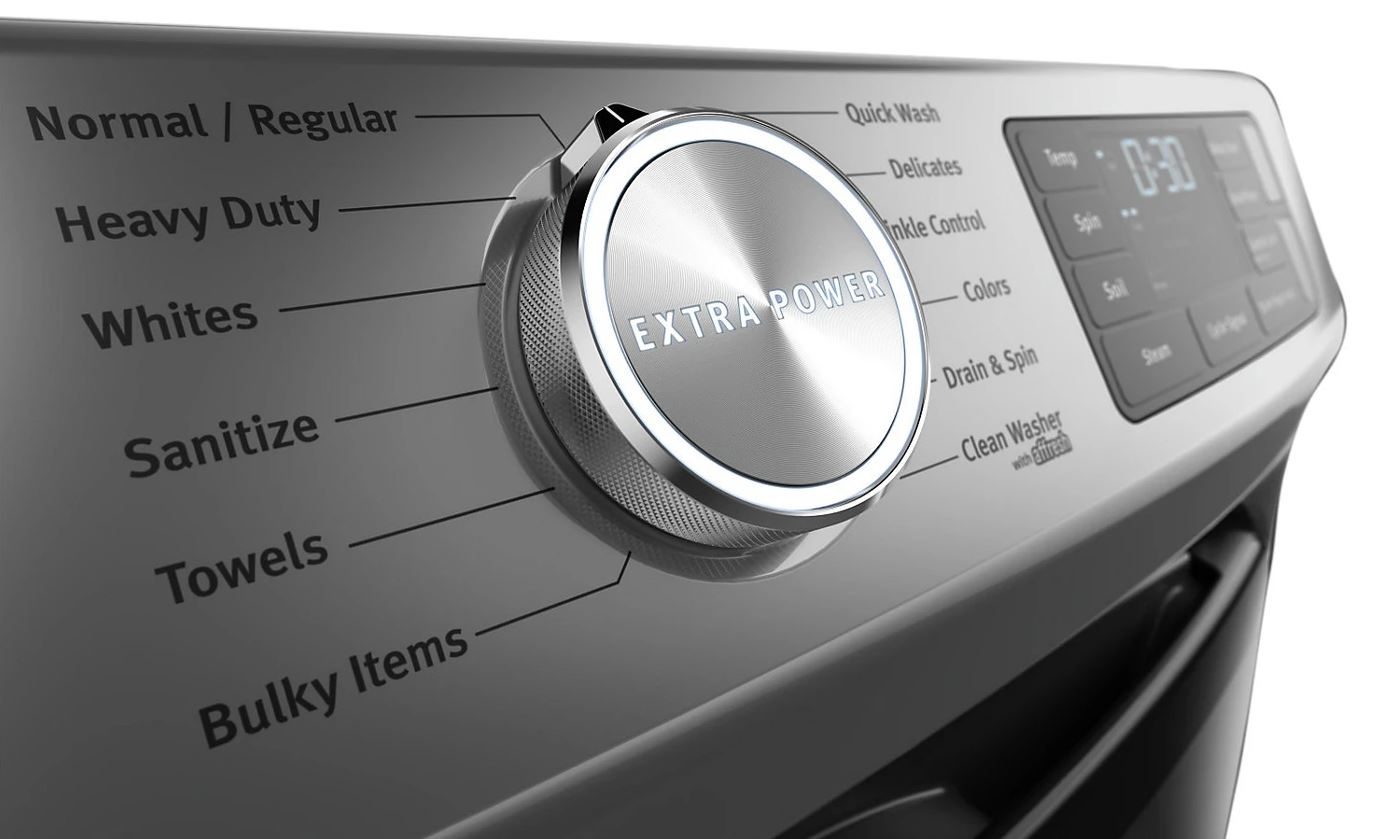
deeThrow94
I'm kind of ok with that functionality and advertisement. I'm more concerned with people who think that non-sterile clothing will get you sick (even though you're sitting in non-sterile clothing now).
Tijdreiziger
> The request could not be satisfied. The Amazon CloudFront distribution is configured to block access from your country.
ukuina
Try this? https://i.imgur.com/WukGwvs.jpeg

hilbert42
"I seriously doubt that the microbial load would have been lower before the invention of washing machines. And with older washing machines, using those nasty aggressive washing agents:…"
Nasty aggressive washing agents have a pretty devastating effect on bacteria, molds etc. especially bleaching percarbonates and such used for whiteners/stain removers. Surely then it's just a matter of increasing the amount of washing powder to achieve the desired sanitation level.
A rule I use is that if soap suds aren't still present in reasonable quantity on top of water until the end of the wash cycle then there's not enough soap powder being used.
Perhaps the trend towards minimizing the amount of cleaning agents used in washing has gone too far.
Similarly, perhaps also we've gone too far by removing phosphorus (in the form of trisodium phosphate—aka TSP, etc.) from washing powders, which has been a trend in recent years through environmental concerns. TSP, Na₃PO₄, is remarkably good at removing heavily ingrained dirt. It's also highly alkaline and hostile to living organisms.
That said, surprisingly TSP is not very toxic to humans—at least in small amounts. It's used as an acidity regulator/preservative in food, it's E339.
ghssds
TSP can be bought at an hardware store and then added as needed in your cloth washing machine and your dishwasher.
hilbert42
Yeah, I know. My hardware shop sells packs of 2kg of TSP for less than $10 and I use it for many things—cleaning paint surfaces, removing mold (small concentrations left on surfaces even prevent mold from forming), softening surfactants including washing powders, etc.
Those of us with some chemistry knowledge do such things but those people referred to in the story are unlikely to even know about TSP let alone add it or anything else to washing except perhaps fabric softener.
I found the story lacking detail so I went to the source paper† and whilst detailed in parts I also found it quite unsatisfactory. For example, during the test only 14g of 'unspecified' detergent was added. That little amount added to my wash certainly wouldn't remove dirt or oily stains let alone blood stains (which you'd expect to find on dirty medical workers clothes).
Moreover, whilst the paper mentions there are differences between liquid and powder detergents (including rhise with enzyme) little else is said about them. (Surely one should know the exact nature of one's bactericide before one commences.)
Quote extract from paper's conclusion:
"It is however difficult to determine the antimicrobial efficacy of the detergent itself from this study investigations.…"
Why? Again, you'd reckon that would be prerequisite and part of the controls (i.e.: take a fresh concentration of 14g detergent in the equivalent of a washing machine load of clean water and test it then increase the concentration in steps until 99.99% of the bugs died (that level of kill is required of an effective bactericide).
"Several studies have showed that the HAI organisms MRSA and A. baumanii and other Gram-negative bacteria can survive washes performed under 60°C without detergent…."
"without detergent" — for heaven's sake, that's hardly relevant. Who would wash clothing without detergent? None I'd suggest let alone medical workers.
When one actually reads some of these papers one can only conclude that some conclusions are questionable. Perhaps we've a case of bullshit baffling brains (here I mean those funding the research). Had I been on the funding committee I'd have not been happy with this paper.
BTW, those conducting the research are all from a school of pharmacy, you'd reckon they'd know enough chemistry and quantitative analysis to conduct a more exhaustive test.
*†https://journals.plos.org/plosone/article?id=10.1371/journal....
HPsquared
Modern clothes, washed in modern machines with modern detergent, don't seem to last long at all.
That's more a quality issue though, I think. The fabric itself seems weak.
wkat4242
I wear my clothes for a day and then wash them, they last about 100 washing cycles before they fray and or discolour too much. That's not bad IMO. All good quality cotton though. I only wear cotton, except underwear and socks.
Doxin
I have clothes that have survived decades of wear and are still structurally completely intact. Any new clothes I buy will last one season at best before the fabric just disintegrates. There's a definite change in fabric quality going on.
arp242
> it's a bold hypothesis that a household washing machine should sterilise clothes
No such hypothesis was made.
empath75
Others have said this more sarcastically, but the article is aimed at hospital workers who are exposed to dangerous pathogens at work on a regular basis, not the average person.
Ferret7446
For almost 100% of the history of washing textiles, sterilization was never even remotely a goal. In most cases, sterilization is undesirable and would likely contribute to the growing proportion of autoimmune deficiencies.
Do you also sterilize your kitchenware? Well, given the population bias of HN, probably some of you do, but the vast majority of humankind do not. If you don't sterilize things you put into your mouth, I don't see why you'd expect this for clothes.
So it is amazingly unsurprising that consumer washing machines don't sterilize clothes. Just as you need to take extra care to sterilize kitchenware when you're doing anything fermenty, hospitals shouldn't have been relying on home washing machines.
JumpCrisscross
> it is amazingly unsurprising that consumer washing machines don't sterilize clothes
The article is about “health care workers who wash their uniforms at home.”
usrnm
Hospitals, for the most part, are not sterile. Some parts of them are, like operating rooms, but the vast majority of the space is not and is not expected to be.
wildzzz
They make laundry sanitizer you can add to the fabric softener cup, it's just unscented Lysol. There's a big difference between clean, sanitized, disinfected, and sterilized. If you're working with plain soap and detergents, it's only going to come out clean. Anything beyond that requires a lot more heat and more chemicals.
kadoban
Dishwashers get _quite_ hot for a long period of time, and there's relatively harsh chemicals in there too. Does anything realistically survive that anyway?
aaronbaugher
Pressure canning exists because botulism bacteria or spores can survive boiling temperatures, so you use pressure to get the food up to something like 240F for 30-120 minutes (depending on the food) to kill them. So I'd guess the answer is yes, though that doesn't account for any chemicals.
firesteelrain
Technically correct but I really hope people are not encountering botulism on a daily basis.
sct202
Sometimes a red/pink film will start to grow in my dishwasher especially under the filter grate. I use a dishwasher sanitizer to kill it.
deeThrow94
Probably also a sign you're using too much detergent.
lukan
Some pathogens also survive hard radiation in space.
Even desinfection does not kill everything.
Also no need to, bacteri and virus are a normal thing. The problem is, if too many of the wrong type get in your system. So reducing them in general (and also normal washing machines do that) is mostly sufficient.
(And dishwashers indeed kill microscopic life with heat and chemicals, but that is a side effect of cleaning)
monster_truck
Almost any decent modern dishwasher sterilizes kitchenware as an option.
Likewise for washing machines. If you read the paper you will see they only tested 6 machines and chose 60C as a theshold for some reason. Every machine I've used with a sterilize function uses ~76C water.
bluGill
I sanitize my dishes by getting the things pathogens eat off. Then they sit in the cupboard overnight which is plenty of time for pathogens to die.
resteraunts that reuse dishes several times need a better plan but not my house.
firesteelrain
Restaurants have to run their industrial dishwashers at really high temperatures (180F), low temp (120F) w/ chemical sanitization, or the three sink setup for manual washing with chemicals and varying temps.
colonial
> Do you also sterilize your kitchenware?
In the US, the FDA requires commercial dishwashers to hit 165F. Consumer washers usually start around ~120F (from the water heater) but even my "landlord special" cheap GE washer claims to hit 140F, which is enough to kill off 99.99% of bacteria in just a few minutes.
So, yes, more or less involuntarily - although I certainly don't mind the lack of salmonella on the forks I use to prick chicken breasts.
undefined
TheBigSalad
Doesn't washing your dishes with soap and water sterilize them? Certainly stainless steel silverware, right?
quickthrowman
If that was the case, surgical instruments would be sterilized with soap and water instead of in an autoclave.
myself248
My dishwasher gets to 159°F as measured by my Thermoworks DishTemp, so yes.
bgro
Are people perplexed by the prevalence of bacteria in residential washing machines? That’s what the smell is when clothes are left wet for too long or the door is left open, preventing drying.
Though I wonder what effect a standard load with bleach would have when used in a load or if that’s simply what the article refers to as their disinfectant test.
c12
I guess a lot of people don't leave the door open so the machine can dry between loads. None of my washing machines have had issue with smell but I also run a 90 degree boil wash once a month to clean things out.
It's almost as though people forget these are machines that require maintenance and cleaning.
myself248
My Maytag Neptune retains so much water from the previous load, that leaving it open is absolutely ineffective. It molds after 3-4 days no matter what. I can spin the drum after leaving it open for 2 weeks, and it still makes a pronounced sloshing noise, there's still a ton of water left in there.
I suspect this was meant to reduce the fill water used in the subsequent load, but that's only sensible if you're doing laundry every day or two. If you go longer between washing sessions, it's just making clothes stinky. Perhaps it's backwash from water left in the discharge hose after the pump shuts off?
So for years, I just run the first cycle empty, hot, with a bunch of bleach. It wastes more water than this stupid measure could ever possibly save, but it keeps my clothes from being stinky.
That machine was just damaged in a flood so I'm shopping for a replacement as I write this, and I cannot for the life of me find this information in any reviews. Does it drain fully? How much water is left behind?
A friend pointed out that some machines have a little pigtail hose out the back with a manual drain valve on it, presumably meant to completely empty the machine before transport. Their theory is that I could put a solenoid valve on this and install my own tiny pump to finish draining the machine after a session, possibly a peristaltic pump which wouldn't be susceptible to backflow from the lift. But again, I can't find information in the reviews about whether any given new machine I might buy, has this little drain pigtail.
sumtechguy
When I first switched to the front load washer I started getting a terrible smell pretty quickly.
How I got rid of it.
1) do not use liquid detergents. powder only. My working theory is the medium used to make it gooey was sticking and giving the mold a good medium to live in.
2) do not use liquid fabric softeners. see #1. I use a fabric sheet on drying.
3) clean cycle once a month
4) washer tablet in with the wash clean cycle, I alternate with bleach every other month.
5) leave the door open between washes
6) drain out the water from the 'pigtail' once every 6 months, or whatever the documentation recommends. It is not just for when you move it. It is meant for the next step.
7) clean out the lint trap. Many have this just before the drain out and before the pump. That thing can get really gunked up. especially with liquid detergents/softners. I use the same schedule as the drain out.
#1 and #2 were the main sources for me. Took about 2-3 weeks before the smell was gone.
For my samsung I would say about a 1/4 gallon is left in the hoses.
tzs
> I can spin the drum after leaving it open for 2 weeks, and it still makes a pronounced sloshing noise, there's still a ton of water left in there.
Is it a top loader? If so double check to make sure you are really hearing left over washing water and not balancing water.
Most top loaders have a sealed hollow ring around the drum, usually near the top but sometimes at the bottom, that is partly filled with water or a saline solution. The liquid in the ring redistributes itself around the drum during spin cycles in a way that counters an off balance load in the drum which reduces vibration and noise.
If you spin the drum by hand the balancing liquid sloshes around and it can be quite noticeable on some washers. Next time you are at an appliance dealer try spinning the drums in some of the top loaders on display. It can sound like a surprisingly large amount of water.
dsego
> there's still a ton of water left in there.
Sounds like is not draining properly, is it clogged up? Should use some vinegar on an empty cycle to descale the heater and all the drain holes.
cmrdporcupine
I too am very annoyed by the "save water" trend in appliances that then produce inferior results. Yes, I know there are parts of the world where this is a concern, but I'm in the great lakes region on a well that produces 20GPM of water and I do not have this concern. Water for me is copious and basically free and when I'm done with it it goes into my septic to reabsorb into the water table.
We switched from a front loading washer back to a top-loading one hoping we'd get results similar to the top-loading washers from our youth. But nope. Funky smells, poor distribution of detergent, clothes that don't fully clean.
ndr42
We had bad smell with just drying all reachable areas and leaving open the door, cleaning everything that is easy disassembled (tubes, water outlet area of the pump) from tine to time.
2 months ago we discovered the boil wash. With some detergent containing bleach it stopped the smell, even if we leave the machine closed during the day.
I our case it's not we have forgotten but never discovered this function.
SoftTalker
Very few washers in the USA have a heat/boil cycle. Hot tap water is the hottest you get.
i think this is partly because in the USA, washing machines run on 120VAC. Heating the water would draw a lot of current.
fkyoureadthedoc
A lot now have various cycles that are hotter, but I'm not sure how hot.
My current washer (Samsung) has: deep steam, allergen, and sanitize.
stubish
It depends on the climate, and I think the smell you are talking about is more likely mold or mildew. In the tropics I found anything left wet for more than an hour needed to be rewashed, as it was already smelling. In colder and drier climates it is much more forgiving (but we still leave lids and doors open to allow the machine to properly dry).
comrade1234
60C held for 15+ minutes should be enough for sterilization. The research paper says they washed at 60C but that the quick cycle was especially poor at sterilization. Other than that I didn’t read the paper closer to see if it was a temperature control problem or not enough time at 60C or something else.
jeroenhd
It depends on what you're trying to do. Some bacteria and viruses will survive 60 degrees. There's a reason running a very hot wash (>60C) can quickly get rid of weird smells inside of a washing machine occasionally.
Extra annoying: enabling eco mode (the one that is tested when generating the power usage stats on the sticker for these machines) on some machines will make it run "60 degree equivalent", which usually means "longer but at a lower temperature", which obviously doesn't work for sterilization at all.
Of course, this is rarely an issue for consumers who don't need to sterilize their clothes (except when a family member is sick with some specific illness maybe?). But, for hospital workers, which this paper is about, that's a different story.
blitzar
> means "longer but at a lower temperature", which obviously doesn't work for sterilization at all
Lower temperatures (e.g. 30-40 degrees C) may even provide a better environment for bateria and/or viruses to grow.
switch007
Don't get me started on eco! Now with heat pump dryers barely heating to 45c only your washing machine can do the job now. And you need a specific function to hold a higher temperature as back in the olden days.
The 90c cycle is the only one I fully trust to get proper hot but I can't wash everything at 90
trebligdivad
I think that they had at least one faulty machine. The 'full cycle' failed on only two machines, 'E' and 'G'; 'E' had an unusually low temperature of about 20c - so probably had a failed heater? (It was 9 years old) 'G' seems to have had the shortest hold time (about 5mins) - so again that might explain it; but why is it so short? Both E and G were Indesits; perhaps they need to build their machines to detect failures.
Still, maybe a failed machine is still a valid test - how many hospital staffs machines are unknowingly faulty?
A quick fix would be to swab staffs clean clothes every so often (or put a test patch in with their washes?) and check it.
beejiu
The study says none of the machines reached 60C, and 2 out of 6 only heated up for 5-13 minutes. No doubt this is so manufacturers can get the Grade A "energy rating" mandated under EU/UK regulation. (It's even worse for "Eco 60" - that only heats up to about 30C).
undefined
chewbacha
A hot dry cycle will also help with this through desiccation but is more damaging to clothing. Should be fine for scrubs though.
neodypsis
Not true. It depends on the pathogen.
lallysingh
I'll wager the ones that do the poorest job in removing pathogens are also the most power and water efficient. Trade-offs matter.
wnissen
Since less water would increase the detergent concentration, I was wondering if the opposite was the case. My family's old washer filled up the entire tub with water, so any detergent (and any pathogen, to be fair) would be quite diluted.
Short cycle length certainly makes sense to be correlated with pathogens. The lousy LG "TurboWash" only takes 28 minutes to do a full load of laundry but certainly doesn't get very much clean in that time.
I have to admit it was surprising that textiles have been identified as the source of hospital acquired infections. You'd think that even if the laundering didn't eliminate pathogens, it would greatly reduce them and make any clusters more diffuse.
fwipsy
As I understand, it's been identified as one possible vector, not conclusively proven to be the only (or even largest) source.
fuzzfactor
Remember the way VW had a digital deception built in to some of their cars that adjusted the emissions when it detected they were being monitored?
Seems like I ended up with a software-controlled washer that is not very straightforward in its behavior and it may have something to do with energy rating.
There's no setting to get a hot rinse, not even a warm rinse, as expected. All those were taken away decades ago on purely mechanical models anyway, but at least a "hot" wash is still there. A mainstream US washer uses the household hot water supply though, they do not self-heat the water. You have two separate water inlets to the machine, one for hot water, one for cold.
You put in the laundry, start a hot cycle, and the drum starts to fill by opening only the hot water supply. It keeps filling whether the top lid is open or shut but it will not start agitating unless the lid is down.
When the lid is open, you can feel how hot the water is as it pours in.
As soon as you shut the lid, the cold water opens up too at full blast even though you just wanted hot. You can hear it and feel it for a second if you open the lid, but then that cuts off the cold and all you get is hot as long as it's open.
Saves a lot of energy when things are not as hot as people think they are.
userbinator
I'm not familiar with the machines in this article, but you can look up the specs on them and see what you find.
cowfarts
[dead]
Cthulhu_
Headline caveat: specifically for medical staff. I didn't realize they have to wash their own work clothes, I always assumed that was done by a professional company using high temperatures and specialized products, if it was even washed to begin with instead of incinerated. The more you know.
eth0up
First, I neither have an eidetic memory or links to the patents nor lawsuit. However....
I remember finding a lawsuit, if I remember correctly, between Samsung and a certain municipality of an unremembered state.
The patent involved a lining within surfaces of the washing and drying systems for hospitals which impart silver particles. The marketing part suggested it would spare x amount of bleach and have equal or greater efficacy.
The municipal water waste management objected based on the breakdown phase of the sewage relying on bacteria. The silver, they surmised, would obviously hinder this process and so on.
Then, as a side note, you have products from waste management called eg Sludge, which is used as fertilizer. Supposedly it is forbidden on vegetable crops, but I once interviewed a cattle rancher who said his subsidies were dependent on his acceptance and use of Sludge.
Further aside, the real problem here is the 'forever chemicals' that accompany these products. It tends to permanently compromise the land it's used on.
I remember the rancher telling me he's seen his cows chewing on condoms.
MarkMarine
With the prevalence of vanity scrubs from figs now I doubt most nurses and doctors I’ve seen recently are throwing their fancy scrubs into the communal wash.
userbinator
The ones in this study are all relatively new front-loaders. I would've liked to see some much older and top-loader machines in there too, along with "traditional" TSP-based detergent.
xyzzy123
That's why you dry your clothes on the washing line in the sun?
jerlam
My HOA has decreed that clotheslines are prohibited.
But my state has also made it illegal to prohibit the use of clotheslines, a "right to dry" law.
Peanuts99
It seems insane to me that a group of people who live near you can tell you how you dry your washing. From a UK perspective, HOA's seem mad.
freddie_mercury
The UK also has homeowners associations and some of them ban outdoors clothes drying.
I'm surprised you didn't know that.
Der_Einzige
HOA's are a death cult to keep the home values of all houses within them guaranteed to go up. The sad part is that it works - HOA neighborhoods have guarantees that things which (old white people) hate, like loud parties, will not happen.
Stop buying HOA homes, and people will stop forming them. The market has spoken and a lot of Americans love them.
potato3732842
HOA rules and local ordinances are written by the most petty people who have the least other stuff going on and the strongest desire to use threat of violence to control other people.
With selection bias like that it's not surprising what you get.
gambiting
The thing that always surprises me about HOAs is that a country boldly calling itself "land of the free" is the one where people are willingly entering agreements telling them what they can or cannot do with their washing, how they can park their vehicle on their property, or how much and how often they can cut their own grass in their own garden. I don't see how these two are mutually compatible, I always expect a more boisterous "don't tell me what to do" attitude from Americans but it looks like a lot of them do in fact enjoy being told what to do(or they put up with it, at least).
Obviously other countries have various regulations around this stuff too, but it's just not as aggressive and not as wide spread as HOAs are in the States.
teeray
> is the one where people are willingly entering agreements
“Willingly” makes it sound like there’s a lot more choice in the process than there is. Many municipalities want a free lunch when it comes to approving new developments—they want all the tax revenue without any of the pesky costs of road maintenance, trash removal, drainage maintenance, etc. The solution? Approve the development with an HOA—now that’s the neighborhood’s problem (tax bills are still due in full though!). They apply this playbook over and over until the large majority of houses coming on the market are in HOAs. Buyers in these markets severely limit their choices (in an already limited market) if they eliminate HOAs from their search.
Enginerrrd
It's a regional thing. In my area on the West Coast, an HOA would be unthinkable.
tasuki
> My HOA has decreed that clotheslines are prohibited.
Is there a reason for this? I'm struggling to come up with a sensible reason tbh...
patja
Many HOA rules are purely esthetic. Which can vary from person to person.
saagarjha
So, are you drying your clothes outside?
nemomarx
Do a lot of apartments have access to a washing line? Also seems kinda slow?
xyzzy123
This is fair - no it won't work in every situation, just didn't see good old air and sunshine mentioned in the thread anywhere.
Surely the only scalable solution in a medical context is to get workers to change out of uniform at work and hand over to industrial laundry service, everything else relies on procedure outside the work environment which not everyone is going to do reliably and is difficult to supervise / QC.
fwipsy
If 90% of workers are able to effectively sterilize their uniforms, will that solve 90% of the problem? Less? More?
whiterock
slow? much faster than hanging them up to dry inside
kadoban
It's slower than throwing them in a standard dryer, in both clock time and human effort time.
PaulDavisThe1st
Depends a lot on the climate and season.
positr0n
A lot of people I know would be constantly sick from allergies if they did this.
OJFord
No, it's why you throw your scrubs in the hospital laundry.
Article is about healthcare workers taking their laundry home, and the resulting sustained pathogens in a medical setting.
undefined
hnick
From a skim it looks like the highest setting tested was 60°C which can kill, but wouldn't be considered sufficient in all cases for food safety for example.
My own washing machine is nothing special (front-loader Euromaid, whatever was cheap ~10 years ago) and you can manually bump to temperature up to 70/80/90°C for a cycle (which adds some time). I haven't measured it though to see how accurate it is and I'd imagine 90°C at least isn't great for those rubbery painted patterns or general clothing integrity either.
I started using the higher temperatures occasionally since I have some old t-shirts, but I always have to stop wearing them since the underarms develop a crust - I guess it's some kind of bio-reaction between me, my bacteria ride hitchers, and deodorant. Higher temps do seem to delay this build-up (which seems impossible to clean off), but does seem to reduce the life expectancy of the clothing. When I see people (mostly women) still wearing shirts they got in high school, it makes me a little envious. Mine got that issue in < 5 years before changing the wash temps :(
tuatoru
Do hospitals seriously allow people to launder their own uniforms?
That would never be allowed in the food industry.
c12
Yes. When I started working in hospitals it wasn't the case. We had an onsite laundry facility and tailor. You would obtain your uniform from the tailors, tailor made to fit, they would also repair any damaged uniform.
You would place worn uniform in a bag labeled with your name and drop if off at the laundry to collect the next day.
Then privatisation came, first they shut down the tailors and you were expected to both purchase your uniform and pay for alterations and repairs (costs you could claim back as a tax rebate if you knew how, how not being advertised.) Then they privatised the laundry, shutting down the one on site and shifting everything to a central location, by everything I mean just the bedding, you were now expected to wash your uniform at home.
The only exception I am aware of is Surgical scrubs, those were provided in sterile wraps and were to be returned to a certain laundry bin for cleaning.
You're right about the food industry, when I worked in kitchens that days uniform was provided, freshly cleaned and returned for laundering at the end of my shift.
zabzonk
I don't know about today, but when I worked in microbiology in the 70s & 80s all our lab coats and similar clothing were washed in central facilities - in most hospitals, the central laundry was (and still is) one of the biggest facilities in the hospital.
danesparza
Yes, but does the central laundry wash all nurse and med tech uniforms?
I would be genuinely surprised if the answer was "yes".
I'm willing to bet they launder bed linens almost exclusively. (And perhaps the food service uniforms) :-)
zabzonk
As I said, I don't know what the exact situation is today, but they certainly did. Would you want us to be sitting on a bus, contaminated with pathogens?
iaaan
What do you mean? I've never heard of a restaurant that launders the employees' clothes for them.
Brian_K_White
restaurants have laundry service for kitchen pants, jackets, aprons, right along with all the towels, napkins, and tablecloths. They aren't the employees own clothes they got from walmart, they are provided by the laundry service like the towels.
forgetfreeman
Now I'm wondering where you live because this is definitely not a thing in the overwhelming majority of restaurants in the continental US.
LadyCailin
I have worked at sit down dining and fast food, and neither places did my laundry for me. Aprons, sure, but not the rest of the clothes. The clothes which I had to buy in the first place.
tacker2000
I would guess that most restaurants already have a laundry service for their tablecloths, etc… which would also take on the staff clothes?
But i never worked in a restaurant, just guessing here.
ender341341
they probably do aprons and stuff like that but even places with uniforms it's super rare that the restaurant would handle laundering clothing.
closewith
In most of the world, most healthcare workers launder their own scrubs and uniforms at home. I used to have a specific washing machine for it because I hated putting forgets uniforms with patient bodily fluids in my normal washing machine.
Things like scrubs exchange machines and central laundries washing staff gear is rare even in hospitals in the developed world.
nadir_ishiguro
I was a bit surprised by that when I first learned that from a healthcare worker, but it's true.
I think this should be taken care of by the employer.
OJFord
If you mean from the perspective of having to do it/pay for it, you can claim I think it's £6/week for it in the UK if you don't have the option of getting it done at work (but hospitals in general do I believe).
forgetfreeman
So should sane work hours and good pay but here we are.
dylan604
After watching The Pitt, they have a mini-plot line around the scrubs exchange machine like it's a normal thing. It was the first I had ever seen one, but I don't work in the medical industry. It felt like something used just to allow for the script to work.
lotsofpulp
After seeing that machine, the only way I could make sense of that machine being used is a corrupt hospital exec buying it from their cousin’s company or something.
OJFord
In the UK I believe you're not supposed to, other than briefly during covid, but it's (still) common.
Also though, you think people buying & wearing their own Figs scrubs would get them back if they put them in the hospital laundry service? And what about non-scrubs for that matter?
undefined
danesparza
"Allow" is a funny word.
"Require" might be more appropriate.
And I agree - the medical industry (specifically in the United States) cares more about profit than care. It's nuts.
PaulDavisThe1st
Nor firefighting PPE.
Get the top HN stories in your inbox every day.
Well, it's a bold hypothesis that a household washing machine should sterilise clothes. It's a machine to reduce the load of microorganisms to a manageable level and to remove dirt, fat, and odours. I don't get how the authors arrive at their hypothesis. Before washing machines, people washed clothes with their hands. Cooking them in a pot was only viable with very robust fabrics made from cotton/hemp/flax. I seriously doubt that the microbial load would have been lower before the invention of washing machines. And with older washing machines, using those nasty aggressive washing agents: Maybe, but your clothes would not last that long (there's this difference between old US-style washing machines that just stir and don't heat and EU washing machines that have a drum that turns and always heat the water).
And then, "potential pathogens" in the biofilm in the machine. Ah, well. My skin and mouth are also full of potential pathogens. I don't know what this study is trying to show. Washing machines are not sterile, I guess.