Get the top HN stories in your inbox every day.
vviers
stefandesu
Damn, this might be exactly what I've been looking for recently. Excited to try it out!
The advanced sharing and permission features sound great. We've been using Nextcloud + OpenOffice for this and apart from being able to lock certain parts of the spreadsheet with a password, it doesn't have any of this.
kleiba
Another sign that I'm getting old: the editing of the video is way too fast-paced for me to understand anything what's going on. :(
StevePerkins
Even slowed down to 0.75x speed, it's like watching a street hustler shuffle three cups around with a little ball underneath one of them.
When the narrator says, "It's that easy!", I want to punch them in the face.
fragmede
The corollary of YouTube/VLC/other programs being able to play videos back at 1.5x speed is that slowing videos down and playing them at half-speed is just a menu option away.
kleiba
That's a technical solution to a non-technical complaint, though :-)
stronglikedan
Unfortunately, all the videos on the landing page are embedded without such controls or links to external players.
antifa
YouTube offers 1.25x, but almost always I actually need 1.1x, 1.2x, or 1.3x.
wazoox
In fact with a passing familiarity of AirTable I immediately understand it but I think it's probably the intended audience...
MalcolmDwyer
I would say it's not your age, but I'm getting old too, so...
Anyway, suggestion to the developers:
Your intro video needs work. A little context setting would go a long way in those first few examples. Five seconds in and I'm thinking, "wait, what?"
Also, the audio sounds very amateur (bad mic in an echoey room).
dgan
I am not that old and after watching first 14 seconds : i have no idea what's going on
Maybe because i don't use spreadsheets in daily job
browningstreet
And:
I must be getting old.. at the end of the video the narrator says, "and a hell of a lot more!" and I thought that was pretty crass.
burrish
I am young and it was too fast for me too
smcleod
It was the annoying feel good backing music that got me.
robertlagrant
Just a small comment on your site: it shows examples of legal processes, and HR records, including people's pay.
I understand this is just an example, but anyone who wants to actually use it for that is going to want a lot more marketing collateral up front explaining how this very sensitive data is going to be locked down.
anaisconce
That's a great point. Grist employee here.
Grist has access rules which give the document owners the ability to set rules that limit who can see or edit what, down to each table, column, or cell. Rules can be based on user attributes, including attributes defined by the document owner (e.g. roles within a company), and based on values in cells (e.g. if a row's boolean field is true or false).
robertlagrant
Thanks - I'm sure those exist, but I just meant from a first impressions from your website perspective.
On the document thing - this is still a little tricky, as e.g. IT should probably be in charge of assigning permissions, but they shouldn't be able to see salaries.
Terretta
Not access controls by the user team governing the team, access controls governing you. For instance, most companies that "take your security very seriously" but also provide support let themselves browse customer data.
Here's a strong form to help threat model: are you warrant-proof?
If authorities demand customer data, can you give it to them?
In general, if the answer is yes, then not just the government warrants but your own insider threat is also a threat to your customers.
It may be that self-managed hosting is your answer, with the inevitable "call us" pricing: https://www.getgrist.com/product/self-managed/
But as most companies will be putting data in a spreadsheet that has laws around it whether they consider themselves "regulated" or not, all firms should be interested in the warrant-proof answer.
milkshakes
this is a strange comment on a link to a github repo with extensive documentation, including a dedicated guide on how to set up self hosting: https://support.getgrist.com/self-managed/
melesian
I help run a small non-profit that has managed data in a number of spreadsheets. Grist made it v simple to pull the data into a web site linking it together with a variety of different scrollable views. Came across it while looking for lo- and no-code solutions and quickly stopped looking. It was just the ticket.
notyoutube
Could you expand on how the linking is done:
* Are you self-hosting?
* What auth method are you using?
* How is the linking done? I presume API (or are you just using widgets?), but that means you need users to copy/paste their API key by hand?
Thanks!
melesian
Not self-hosting. Linking by identifying key fields. Currently just using password login.
qubex
What I really want is a spreadsheet that separates formulas from data as Lotus Improv did, has a native understanding of tables as Apple Numbers has, and solves circular references as Microsoft Excel does.
dsagal
[Grist founder here] On separating formulas from data, that's always been an important part of Grist.
In Grist, check out the "Code View" page in the left-side panel -- it shows all the logic (i.e. formulas) of the document along with the Python data model (i.e. all the column names and types).
Also, you can save or download a copy of the document without the data, but keeping all the formulas. So you can get all the logic (and formatting, layouts, etc), and use it for different data.
(No support for solving circular references though.)
qubex
Any particular reason why knowing how useful it would be you’ve not implemented some kind of Newtonian iterator to solve circular references numerically?
animal_spirits
Apple Numbers has the most potential of any spreadsheet software in my opinion. It is so much easier to use than any of it's competitors, however the features are slow to come.
qubex
I agree, I use it intensively and extensively. I really wish it had circular solving functionality, as that is crucial for financial planning (in order to estimate debt on the balance sheet and interest payable on the profit and loss account you have to converge onto a solution), and it simply offers no ability to do that. So many other important features are missing to, from the ability to lock cells or sheets so others can’t mess them up to statistical analysis and plugins.
I really adored the old versions that had the sidebar with sheet and table lists.
But yeah, it definitely has enormous potential. They just keep adding features that are pretty useless, such as the ability to annotate with a Pencil or various realtime collaboration features. That’s all pretty pointless. They have a potential winner on their hands and they don’t even bother implementing the stuff power users need. Keynote clearly benefitted from Steve’s intensive use of it. Somebody in the C-suite really needs to settle into using Numbers as their main spreadsheet and then growl at developers to implement the features they find themselves wanting.
adamrezich
for anyone who hasn't seen Lotus Improv before and is both curious about what it did differently from "standard" 1-2-3/Excel spreadsheet programs and wistfully nostalgic for late 80s/early 90s corporate vibes, check out https://www.youtube.com/watch?v=rgGmKD87U3M
WillAdams
Well there's Flexisheet:
https://sourceforge.net/projects/flexisheet/
but getting it compiled/working is left as an exercise for the reader.
I miss it, book, and a bunch of other cool stuff from early Mac OS X days.
evan54
What are the usecases for non standard spreadsheets? Ie when does one of libre office, google sheets or excel not suffice that people spend time developing a new spreadsheet software? Honest question..
asqueella
Grist is more like Airtable, a spreadsheet/database hybrid.
Regular spreadsheets give you a number of independently configured cells, which gives you maximum flexibility, but becomes inconvenient when you want tables instead: have a fixed structure, enforce column types and validations, implement row-level access control, or join them together.
You can say it’s a type of no-code tool, enabling you to build a CRUD app with a spreadsheet-like interface. Their website even features demos like “lightweight CRM” and “class enrollment”.
SoftTalker
> You can say it’s a type of no-code tool, enabling you to build a CRUD app with a spreadsheet-like interface.
Sounds like Microsoft Access
ibejoeb
Access was an amazing product. It was quick to a hit a performance wall, but damn it was amazing for business applications. Imagine replacing its rdbms engine with sqlite...
sneak
Libreoffice is missing huge swaths of features that Excel has, and isn’t very good. Google Sheet is a cloud service packed with surveillance, not software. Excel is proprietary and expensive and has invasive spyware.
There is definitely a market for a good free software featureful spreadsheet tool.
masfoobar
You hit the nail on the head, here.
While there is a market for more spreadsheet tools to which I welcome... sadly, it is not just about spreadsheets, it is about Suite/Office tools.
In order for a new spreadsheet killer to stand a chance, it needs to be alongside an Access alternative, Word alternative, etc. Without this, I dont think it will catch up with Microsoft/Google Suites no matter how good it is.
This is why LibreOffice will stick around for quite some time.
I do like LibreOffice and appreciated the work done on it. From memory, it has improved a lot since it branched off OpenOffice. Admittedly, it is not comparable to MS Office.
Focusing on Spreadsheets... MS Excel, compared to LibreOffice Calc, is a smoother experience and easier to use. I would not be suprised if it has more features. I can say the same thing for MS Word vs LibreOffice Writer. I have not used LibreOffice Base but I would not expect it to be as good as MS Access. I dont use them so cannot comment further.
Personally, I would love to see a Spreadsheet program which enables you to write Scheme code behind it, rather than some Excels VBA-like language. Easy to code and extend and automate.
pbhjpbhj
What would you say the most important [to you] features are that LO is missing?
actuallyalys
I’m not the person you asked, but a feature I miss in LibreOffice Calc is the ability to define tables. You can add manually emulate some of the features by adding filters and formatting (which could become a macro) but you can’t do structured references to include parts of the table in an organized way.
This discussion covers it in more detail: https://ask.libreoffice.org/t/how-to-create-format-as-table-....
atoav
I am curious about that as well, because I heard that one often and whenever I ask: "Like what?" it is either some obscure function that you could build yourself with a few lines or it is crickets and a: "Don't know, I just like it better".
Note: I am not saying there are no true and valid differences one or another person could really rely on. But having worked in IT-support I know that not few people like to give pseudo-rational reasons, when in fact it is often more about feelings. I don't say that feelings/look/design is irrelevant: "I like the design of Excel more", is a totally valid reason for choosing it over Libreoffice. But in the end many people pretend there is more to it. I have yet to encounter a situation that I couldn't resolve using Libreoffice Calcs features (ignoring insane scenarios where writing a well tested script or using an actual database would be the rational option).
solarkraft
I dislike the UX of Libre Office (the way it scrolls alone drives me mad) and Excel and Google Sheets are proprietary and SaaS-y.
One thing that actually has pretty great UX is Apple's Pages (mainly the concept of fine-grained table creation), I'd love it if someone copied that.
icegreentea2
There aren't many reasons to create a freeform spreadsheet editor to compete with Excel or gsheet as standalone applications.
The two areas where it makes sense to compete are:
a) Embedding a spreadsheet like (to varying levels of featurefullness) interfaces into other applications or workflows. A minimal feature set probably doesn't even involve formulas, just the UI affordances of a typical spreadsheet (ie it needs to copy and paste like a spreadsheet).
b) You are building something that acts like ms access (or airtable), just aiming for different blends of functionality/freeformness/end user fiddliness.
genericacct
Sometimes you want something cloudy but you want to keep all the data inhouse. Sometimes you want to integrate it into a product offering. You want to use a tablet as a spreadsheet monitoring machine.
crdrost
Wow! You got a lot of responses!
For me I think it's just the sheer time investment, personally. Spreadsheets give a very easy programming language, no compiler, via Google sheets my phone can run it and my browser can run at and I can link it to someone... All great pros! But then it takes so long to be effective with them.
Give you an example of the last big app that I wrote for a spreadsheet: I have a 2-year-old, she was born a bit underweight with lip/tongue ties that gave her trouble latching, so we chose to do a hybrid breastfeeding/formula approach; we'd use bottles of pumped milk where we could, but if she was too frustrated to latch and we'd already used up the pumped milk we'd break out the baby formula.
But, we knew this was a risk: milk production is in response to demand, when it goes dry you activate more tissues that make more milk later. So I wanted to be able to answer my wife's questions of “is my milk supply getting stronger or drying up, what percentage of her diet was formula, etc.” and my own questions of “did I enter all of yesterday's stuff properly?”
So the spreadsheet is, a Google Form first dumps {
    timestamp: date
    what: enum('milk', 'formula')
    from: enum('mama', 'enfamil', 'costco', 'bottle', 'freezer')
    to: enum('waste', 'kid', 'bottle', 'freezer')
    oz: decimal
    when: nullable(date)
    rowID: number
    effectiveDate: date
    check: boolean
These then get sorted on a following page and chunked by day. Another page allows me to track “how much milk is currently in bottles, how much formula is currently in bottles, how much milk is in the freezer," and an enhanced version on the next page shows me all of the account balances by date. Why these? So that I can answer “did I forget to input some of this milk/formula in my sleep addled state?”. A lot of this tracking was done by using my phone to just take a picture of an amount in a bottle and then piece together what had happened that day later. So it had to be checkable, “this says I have X ounces in the fridge, do I have that?”
The next page just has plain text, these are derivations of mathematical formulas, explanations of the modeling I wanted to do, thinking out loud so that the formula is showing up on the next page are not out of context when I later go to change them.
From the daily balances finally we get the models. Some ways I do this are to use a binomial distribution to smooth the data that I've got, with noisy data that can be a little bit easier than independent data points. I also tried some autoregression modeling to try and predict, with error bars, “today, tomorrow, the day after” for the binomial smoothing. I wanted to do this for three series which ended up being "total fluids kid has consumed, total milk pumped into either bottles or freezer bags, and formula: consumed milk ratio.” but this required a lot of iteration over different things that I might have wanted to try to graph before I could answer the questions that I really wanted to.
So I then like to plot line graphs where the data points are little X's, there are two dotted fit lines, one with the error from the model added, the other with the error from the model subtracted, so you get this kind of snake of error envelope that is just a running average in the middle but “opens its mouth” at the end, so that I am not telling a story that is not supported by the error bars given only the past couple days' data. If the entire snakehead is pointing up then yes, “your supply looks to be getting stronger this week!” but otherwise “it's still a bit early to say but here's what the story was three or four days ago.”
When I describe this to you it doesn't sound like a very complicated app, right? But writing it in a spreadsheet, which I needed so that I could input data or correct it from my phone at 3am, made this a very slow process, hours and hours were sunk into this tracking spreadsheets to get them where I needed them to be. And that's the big problem is that spreadsheets are kind of an “assembly language” level of solution where you have individual cells/registers that you have to track and update and coordinate, but the system doesn't connect everything together semantically so you have to express every single relationship yourself and then auto fill columns and whatever else to make it work.
dang
Related:
Grist – Open core alternative to Airtable and Google Sheets - https://news.ycombinator.com/item?id=30392227 - Feb 2022 (107 comments)
emmett
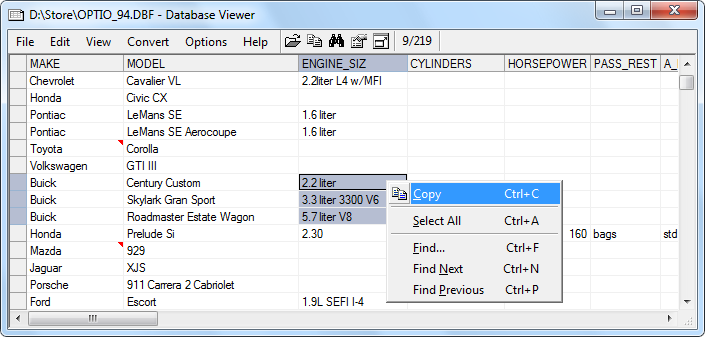
Everything old is new again (FoxPro says hi https://www.altap.cz/images/salamander/features/database-vie...)
speby
This is true except FoxPro really was more of a 'normal' relational database model. It just had this 'tabular' view for its Database Viewer client front-end. FoxPro was certainly not a 'spreadsheet' product in the sense that Excel is.
aidenn0
FoxPro was bundled with MS Office at one point, and it blew me away with how easy it was to make data-centric apps. It's the only thing I've experienced that comes close to a spreadsheet for enabling programming for those who would identify as non-programmers.
spandextwins
Oracle says "hi" too! I remember seeing ads in Infoworld for a product called SQL*Calc. As far as I know it was fully vaporware, Oracle never even did anything past a photoshop (or more likely ms-paint) advertisement for it, but somebody on usenet may have used it:
https://www.orafaq.com/usenet/comp.databases.oracle.server/2...
PurpleRamen
Last time I tried this some months ago, it looked ok on paper, but a bit off in usage. Something about the interface and feature-set seems to lack polishing for me. It was also annoying that there was no easy way to add custom-widgets, despite having the ability for this. But I'm also no docker-wizard.
A bonus was the desktop-app. Having the option to run it offline is a good choice.
kamphey
This looks promising! I've been asked a lot about embeding google sheets into websites. Always been using a work around but this seems like it could be pretty special: "to show Grist spreadsheets on a website without any special back-end support, your options include grist-static, a fully in-browser build of Grist. "
protontypes
That's exactly why I'm also very interested in using Grist. Embedding spreadsheets into web pages has never satisfied me and has resulted in unacceptable load times.
melih1im
Embedding spreadsheets especially with iframes seems alien in websites. I've used retable.io feature to get the data in json or html. It works great with wordpress
bartekedgenode
Its rare to find a product that is flexible, powerful and well developed. Grist is all of those. There is a lot of resources available so you can move through problems quickly, and on top of that you can connect pretty easily with knowledgeable grist staff to get answers and help. Grist is the best!
arilotter
oh my god I just spend the last 6 months building something exactly like this as an internal tool because i couldn't find ANYTHING open-source that was remotely powerful enouhh for what i needed. this fits basically every single use case i had, i would only have to write a custom storage format to make data git-trackable.
i'm gonna go cry now.
please don't tell me this has been out for a while and i missed it.
Hedepig
From another comment, looks like at least 8 years. Sorry!
Get the top HN stories in your inbox every day.
Happy (self-hosted) Grist user for almost 1.5 years here !
Working for a government agency, self-hosting was an absolute must for my team and we're just loving the product so far — and have been contributing a lot to it in return (they are very serious about really playing the open-source game!)
What I love the most is that the way it's build makes it easy for anyone familiar with spreadsheets to get started while making virtually anything possible for a more technical person through custom widgets (basically a web app that integrates with any table and is displayed within Grist) and python formulas !